Lionel Messi's Most Documented Swear Words: A Linguistic Dictionary
He's the most decorated footballer in history, known for his quiet humility — but Lionel Messi has a documented, FIFA-sanctioned history of Argentine Spanish profanity that tells a very different story. Here's every incident, rated on our severity scale.
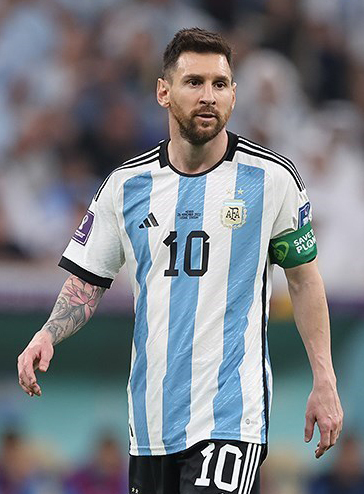
Lionel Messi's Most Documented Swear Words: A Linguistic Dictionary
Lionel Messi is the most decorated footballer in human history. Eight Ballon d'Or awards. A World Cup. Over 800 career goals. A man whose public image has been so meticulously, consistently, almost boringly humble that he makes other athletes' media training look like amateur hour. He whispers in press conferences. He thanks God and his family. He lets his feet do the talking.
Except when he doesn't.
Because Messi also has a documented, FIFA-sanctioned, camera-verified history of profanity that paints a very different portrait — one of a Rosario-born Argentine who, when pushed past his threshold, reaches into the deepest register of Spanish profanity and lets it fly. Not for show, not for brand-building, not as a rhetorical strategy — but because something on the pitch cracked the veneer, and out came the real voice underneath.
This is the linguistic record. Every quote below is sourced to broadcast footage, official FIFA proceedings, or on-the-record player confirmations. We're rating each incident on our 1–5 severity scale and analyzing what it reveals about Argentine Spanish, cultural register, and the gap between the man on the billboard and the kid from Barrio Las Heras.
The Messi Vocabulary System
Before we get to the incidents, it's worth understanding how Messi swears — because it tells you as much as what he says.
He swears exclusively in Argentine Spanish. Not Catalan, despite living in Barcelona from age 13. Not English, despite years of global media exposure. When the filter drops, the language that comes out is pure rioplatense — the River Plate dialect of Buenos Aires and Rosario, with its distinctive voseo grammar, its Italian-inflected intonation, and its particular arsenal of profanity.
This is significant. Language researchers have long observed that bilingual speakers revert to their first language under extreme emotional stress — what linguists call the "mother tongue regression" phenomenon. Messi could construct a sentence in Catalan or English. But when Wout Weghorst is staring him down after a World Cup quarterfinal, the words that surface are the ones he learned on the streets of Rosario before FC Barcelona ever knew his name.
His signature phrase is "la concha de su madre." This is the nuclear option in Spanish profanity — a reference to the mother's genitalia that translates roughly to "his mother's cunt." In most of the Spanish-speaking world, this phrase is a genuine shock-value escalation, the kind of thing that ends friendships and starts fistfights. But in Argentina — and this distinction matters enormously — it functions more like an all-purpose intensifier. Argentines use it the way Australians use "fuck" — constantly, casually, in contexts ranging from genuine fury to mild traffic frustration. Understanding this cultural gap is essential to understanding why FIFA banned Messi for saying something that, back home, barely raises an eyebrow.
His profanity is reactive, not strategic. This is the crucial distinction between Messi's swearing and, say, a politician who deploys profanity for crowd energy, or a chef who uses it as a management tool. Messi doesn't swear for effect. He swears when something breaches his threshold — a dangerous foul, objects thrown at his teammates, a post-match confrontation. Every documented incident follows the same pattern: provocation, silence, escalation, explosion. He doesn't build to it. It detonates.
Documented Incidents: The Severity Ratings
"Qué mirás, bobo" — The Words That Broke the Internet in Qatar (2022)
The phrase: "Qué mirás, bobo. Andá pa' allá, bobo. Andá pa' allá." Translation: "What are you looking at, idiot? Get over there, idiot. Get over there." Severity: 2 — Moderate
This is the one the whole world saw. December 9, 2022 — Argentina vs. Netherlands, World Cup quarterfinal in Qatar. It was one of the most ill-tempered matches in recent tournament history: 17 yellow cards, a Dutch equalizer from a set-piece that felt like a dagger, and a penalty shootout that Argentina won on pure nerve.
In the post-match interview — live, on camera, microphones hot — Dutch striker Wout Weghorst approached Messi, apparently to exchange words or a shirt. Messi turned, looked him dead in the eye, and delivered the line that would become the most viral moment of the entire World Cup: "Qué mirás, bobo?"
The severity rating here is instructive. Bobo is mild — it's closer to "dummy" or "fool" than to any genuine profanity. In the taxonomy of Argentine insults, it barely registers. Pelotudo would have been harsher. Hijo de puta would have been nuclear. Messi chose the lightest available option — and that restraint, paradoxically, is what made it devastating. It wasn't rage. It was dismissal. He treated a 6'3" professional striker like an annoying child.
Within hours, the clip had been viewed hundreds of millions of times. "Qué mirás, bobo" became a meme in every language. Argentine fans printed it on t-shirts. It trended globally on every platform. The phrase entered the permanent cultural lexicon of the 2022 World Cup — not because it was profane, but because it was the moment the quiet man spoke, and what he said was perfect.
Source: ESPN, BBC Sport, broadcast footage archived globally.
The Phrase That Got Him Banned by FIFA (2017)
The phrase: "La concha de su madre!" Translation: "His mother's cunt!" / "Motherfucker!" Severity: 5 — Nuclear
March 23, 2017 — Argentina vs. Chile, World Cup qualifier in Buenos Aires. Argentina were struggling to qualify for Russia 2018, the pressure was immense, and Messi was arguing with the assistant referee about a call. Caught clearly on camera and audio, he unleashed the full la concha de su madre directly at — or in the direction of — the official.
FIFA's response was swift: a four-match ban and a $10,000 fine. For context, four matches in World Cup qualifying is catastrophic — it meant Messi would miss crucial qualifiers against Bolivia, Uruguay, Venezuela, and Peru. Argentina's already precarious path to Russia 2018 suddenly looked impossible without their best player.
The Argentine Football Association (AFA) appealed, and here's where it gets linguistically fascinating: their defense rested on the argument that Messi was "cursing at the air" — that the phrase was an expression of general frustration directed at nobody in particular, not a personal insult aimed at the referee. FIFA's Appeals Committee partially accepted this, reducing the ban from four matches to one.
The AFA was making a legitimate linguistic argument, whether they knew it or not. In Argentine Spanish, la concha de su madre genuinely does function as an interjection — the way an English speaker might yell "fuck!" after stubbing a toe, without directing it at the toe, the table, or anyone in particular. FIFA, operating from a European linguistic framework where the equivalent phrases are always directed, initially interpreted it as a personal attack. The appeal bridged that cultural gap.
Source: ESPN, FOX Sports, Remezcla.
The Sergio Ramos Incident — Supercopa de España (2017)
The phrase: "La concha de tu madre!" Translation: "Your mother's cunt!" Severity: 5 — Nuclear
August 2017 — the Spanish Supercopa second leg between Barcelona and Real Madrid. Sergio Ramos, never one to shy away from gamesmanship, threw the ball over Messi's head during a dead-ball situation. Cameras from Marca caught what happened next in perfect clarity: Messi turned and shouted "la concha de tu madre" directly at Ramos.
Note the pronoun shift. Against the Chilean referee, it was su madre — "his mother," third-person, plausibly directionless. Against Ramos, it was tu madre — "your mother," second-person, unmistakably personal. The AFA's "cursing at the air" defense wouldn't work here. This was a guided missile.
The incident revealed something else: la concha de su madre isn't just Messi's most severe phrase — it's his only severe phrase. While other footballers rotate through a diverse vocabulary of abuse, Messi appears to have one nuclear weapon and deploys it exclusively. It's linguistically efficient: why develop an arsenal when one phrase does everything?
Source: Marca — "Messi le gritó 'la concha de tu madre' a Ramos" (2017), widely reported by Spanish media.
The Valencia Fans Tirade (2016)
The phrase: "La concha de su madre, hijos de mil putas!" Translation: "Their mothers' cunts, sons of a thousand whores!" Severity: 5 — Nuclear
February 2016 — Barcelona had just scored a 94th-minute winner at Valencia's Mestalla stadium. As the Barcelona players celebrated, Valencia fans in the stands hurled bottles and objects at the players on the pitch. Messi, incensed, turned toward the stands and directed a tirade upward that lip-reading analysts and Spanish media decoded as the phrase above.
This is the only documented incident where Messi combines multiple profanities in a single outburst. The base phrase la concha de su madre is his standard weapon, but hijos de mil putas — "sons of a thousand whores" — escalates the register significantly. The "thousand" (mil) is a distinctly Argentine intensifier; in Spain or Mexico, the phrase would typically be just hijo de puta ("son of a bitch"). The amplification to "a thousand" is pure rioplatense excess.
Also note: this is the only documented case of Messi swearing at civilians rather than players or officials. The provocation — objects being thrown at teammates — crossed a line that moved him from controlled athlete to genuinely angry person.
Source: Bleacher Report, widely covered by Spanish and international media.
"Hijo de puta" — The Wellington Incident (2014–15)
The phrase: "Hijo de puta" Translation: "Son of a bitch" / "Son of a whore" Severity: 3 — Strong
During a La Liga match between Barcelona and Malaga, Messi was fouled by Brazilian defender Wellington. In the aftermath, Messi reportedly called him hijo de puta — and what makes this incident unusual is that Wellington confirmed it to the media. Most players on the receiving end of Messi's language either don't hear it clearly or choose not to publicize it. Wellington went on record.
Hijo de puta is the bread and butter of Spanish-language football profanity. If la concha de su madre is Messi's nuclear option, hijo de puta is his conventional arsenal — strong enough to register, common enough to be almost expected. Every Spanish-speaking footballer has said it. Most have said it today.
Source: Spanish sports media, confirmed on-the-record by Wellington.
The James Milner "Burro" Incident — Champions League (2019)
The phrase: "Burro" Translation: "Donkey" Severity: 1 — Mild
May 2019 — Champions League semifinal, Barcelona vs. Liverpool at Anfield. Messi was reportedly caught calling Liverpool's James Milner a burro — "donkey" — after a heavy challenge. In the taxonomy of football insults, this is almost affectionate. Burro implies clumsiness and lack of skill rather than malice. It's the kind of thing Argentine kids yell at each other in pickup games.
What makes it linguistically interesting is that Messi didn't use English, didn't use a harsher Spanish alternative like pelotudo or cabrón, and chose a word that is specifically about football ability rather than personal character. Even in frustration, his insult vocabulary for on-pitch incidents tends toward the technical rather than the personal — unless you throw a bottle at his teammates.
Source: Widely reported across British and Spanish media during 2019 Champions League coverage.
The Full Severity Chart
| Phrase | Spanish | English | Our Rating | Context |
|---|---|---|---|---|
| La concha de su madre | La concha de su/tu madre | His/your mother's cunt | 5 — Nuclear | FIFA ban, Ramos incident, Valencia fans |
| Hijos de mil putas | Hijos de mil putas | Sons of a thousand whores | 5 — Nuclear | Valencia fans tirade (2016) |
| Hijo de puta | Hijo de puta | Son of a bitch | 3 — Strong | Wellington (Malaga), general use |
| Bobo | Bobo | Idiot / fool | 2 — Moderate | Weghorst confrontation (2022) |
| Burro | Burro | Donkey | 1 — Mild | Milner incident (2019) |
Argentine Spanish vs. The World
To understand Messi's profanity, you have to understand something that FIFA initially didn't: the same word can be a firecracker in one country and a nuclear bomb in another.
Linguists call this phenomenon register variation — the idea that a word's severity, formality, and social impact are not inherent to the word itself but depend entirely on the cultural and regional context in which it's spoken. A word that ends a friendship in Madrid might be a term of endearment in Buenos Aires. This isn't a metaphor. It's the literal, documented reality of how Spanish profanity works across the 20+ countries that speak it.
The Case of "La Concha de Su Madre"
In Spain, the phrase la concha de su madre is rarely used and, when it appears, carries extreme severity. Spaniards have their own profanity ecosystem — joder, coño, hostia, gilipollas — and the concha construction feels foreign and maximally vulgar. A Spaniard hearing it would register it as a 5/5 — genuine shock.
In Mexico, it's understood but uncommon. Mexicans gravitate toward chingar and its infinite derivatives — chingada, chingón, chingadera — as their primary profanity framework. La concha de su madre reads as Argentine slang, foreign but recognizably severe. Maybe a 4/5.
In Argentina, it's everywhere. It's what you say when you spill coffee, miss a bus, or stub your toe. Argentine comedians use it on television. Taxi drivers mutter it at traffic lights. Politicians have been caught saying it on hot microphones and nobody particularly cared. In its home territory, it functions at about a 2/5 — roughly equivalent to "fuck" in casual Australian or British English. Still technically profanity. Definitely not something you'd say to your grandmother. But a long, long way from its nuclear status elsewhere in the Spanish-speaking world.
This is literally what the AFA argued to FIFA in Messi's appeal. Their defense wasn't that he didn't say it — the camera evidence was undeniable. Their defense was that what he said didn't mean what FIFA thought it meant. The same phonemes, the same syllables, the same dictionary entry — but a fundamentally different act of communication depending on whether you decode it through a Buenos Aires lens or a Zurich one. FIFA, to their credit, partially accepted the argument.
The Concept of Register
For anyone interested in linguistics, Messi's FIFA ban is a perfect case study in what sociolinguists call register — the way speakers adjust their language based on social context, audience, and cultural norms. Every speaker commands multiple registers: the way you talk to your boss is different from how you talk to your best friend, which is different from how you'd address a judge.
Profanity operates on register too, but it adds a geographic dimension. The word mierda ("shit") is moderate across most of the Spanish-speaking world — maybe a 2/5 everywhere. But concha is a register-split word: its severity varies so dramatically between regions that using it without knowing your audience is a genuine social risk. In some Latin American countries, concha just means "seashell" — you can say it at dinner. In Argentina, it's unmistakably vulgar. In Spain, it's barely used at all.
Messi's profanity is a masterclass in what happens when a speaker from one register system collides with an institution — FIFA — that operates in another. He spoke Argentine. FIFA heard European. The four-match ban was the linguistic gap made manifest.
For a deeper dive into the full spectrum: explore our Spanish swear words collection, where every word is rated and contextualized by region.
"I Was Cursing at the Air" — The Art of the Athletic Denial
Messi's official defense to FIFA — that he was "cursing at the air," not at the assistant referee — deserves its own section, because it represents one of the most creative linguistic arguments in the history of sports discipline.
The defense is beautiful in its simplicity: I said those words. I said them loudly. I said them near an official. But I was not saying them to an official. I was saying them to the atmosphere, to the universe, to the cosmic injustice of the call. The air was my interlocutor, and the air has no feelings.
Is it plausible? Actually, yes — more than you might think. Intransitive swearing (profanity without a target) is one of the most common forms of human language use. Studies in psycholinguistics have demonstrated that swearing under pain or stress is a genuine neurological response — it measurably increases pain tolerance and reduces cortisol levels. When you stub your toe and yell "fuck!" you're not addressing the furniture. You're engaging a hardwired stress-relief mechanism. Messi's lawyers, whether they knew the neuroscience or not, were making essentially the same argument.
Of course, the defense also requires believing that a professional footballer, in the middle of arguing with a referee about a specific call, coincidentally chose to express his frustration at the air at the exact moment he was face-to-face with the official. FIFA's Appeals Committee split the difference: they believed the profanity happened, acknowledged the cultural context, and reduced the sentence. A diplomatic compromise that satisfied nobody completely — which is usually the sign of a fair ruling.
Messi joins a proud tradition of athletes who have deployed creative denials after being caught swearing on camera. Wayne Rooney once told the FA that his outburst was "just part of the game." Zinedine Zidane insisted that Marco Materazzi's provocation in the 2006 World Cup final — reportedly involving Zidane's sister — justified the headbutt that followed, though he never specified the exact words. What makes Messi's defense unique is that it's linguistically creative rather than morally creative: he didn't argue justification. He argued grammar.
The Dictionary Assessment
What does Messi's swearing tell us? Not what you'd expect from reading his endorsement deals.
The marketing version of Lionel Messi — the one on the Adidas billboards, the Inter Miami press conferences, the carefully managed Instagram — is a construction. A real one, arguably an authentic one, but a construction nonetheless. It's the version of a person that survives the industrial process of global sports marketing: smoothed, polished, made safe for every market from Tokyo to Topeka.
The pitch strips that away. Not always, not often — but reliably, under specific conditions. When a referee makes a call that defies what Messi's football brain knows is right. When fans throw bottles at his teammates. When a 6'3" Dutch striker gets in his face after a match that nearly ended Argentina's World Cup dream. In those moments, the marketing dissolves, and what's left is a kid from Rosario's Barrio Las Heras who learned to swear the same way he learned to dribble — on the streets, in the Argentine sun, long before the world knew his name.
His profanity is almost comically narrow: one nuclear phrase (la concha de su madre), one all-purpose insult (hijo de puta), one dismissive put-down (bobo). That's the entire arsenal. No creativity, no variation, no escalation through synonyms. It's not a vocabulary — it's a reflex. And reflexes, unlike press conferences, don't lie.
This is what makes Messi's documented profanity linguistically interesting and, in its own way, oddly charming: it's the most authentic version of him that public life allows us to see. The man who has spent three decades performing humility for cameras becomes, for a few unguarded seconds, exactly who he actually is — an Argentine with a short fuse, a limited but effective vocabulary of abuse, and absolutely no interest in performing for anyone.
The Spanish language has given football some of its most creative, most culturally layered, most linguistically fascinating profanity. Messi uses almost none of it. He just uses the same three phrases, over and over, when reality becomes too frustrating to bear in silence.
Some people contain multitudes. Messi contains la concha de su madre.
Explore the words: concha · hijo de puta · boludo · pelotudo · puta · mierda · carajo · pendejo · verga · cabrón
See also: Spanish swear words · English swear words
References
- ESPN — "FIFA hands Lionel Messi four-match ban for insulting referee in World Cup qualifier vs. Chile" (2017)
- FOX Sports — "Lionel Messi denies swearing at official, claims he cursed 'to the air'"
- Bleacher Report — "Lionel Messi Appears to Curse at Valencia Fans Who Threw Objects at Barcelona" (2016)
- ESPN — "Lionel Messi says he regrets actions in heated World Cup match vs. Netherlands" (2022)
- BBC Sport — "World Cup 2022: Messi's 'what are you looking at, fool?' becomes viral hit" (2022)
- Remezcla — "Lionel Messi Can't Stop Shouting 'La Concha De Su Madre' At People"
- Marca — "Messi le gritó 'la concha de tu madre' a Ramos" (2017)
- AS English — FIFA appeal documentation and AFA defense arguments (2017)